
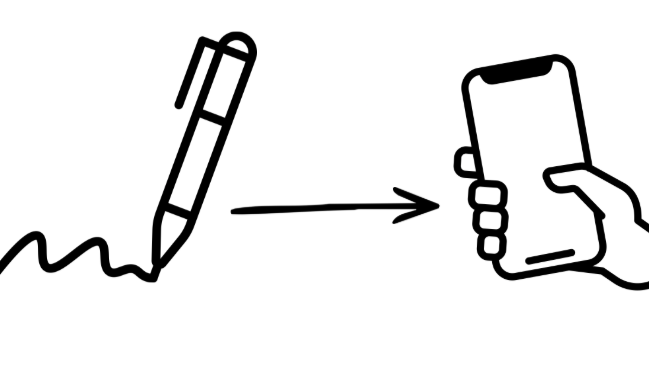
Don’t lose the personal in the shift from analogue to digital
14th October 2026
Over the past few months I’ve spent more time inside health services than usual. Some of those interactions were excellent. Others were not.
What has stayed with me isn’t which ones were digital and which were analogue. It’s which ones left me feeling like a person, and which left me feeling like a task that had been processed.
The best of them had something in common that had very little to do with technology: someone listened, and I came away more confident than when I arrived. The most difficult ones often involved a system working exactly as designed. The form completed, the pathway followed, the data captured, and no real sense at any point that anyone was curious about what I actually needed.
That contrast is what has had me thinking about what “analogue to digital” really means.
Across the NHS and wider health and care systems, the push towards digital transformation is accelerating. Online triage, patient portals, remote monitoring, AI-supported clinical tools and digital pathways are becoming a normal part of how care is delivered, and it sits at the centre of the government’s 2025 NHS 10 Year Health Plan, Fit for the Future. These developments are important and, in many cases, long overdue.
But as services shift from analogue to digital, there is a risk that something essential gets diluted: personalisation. Digital tools can enhance care. They cannot replace the fundamental human elements that support people to live well with health conditions: relationships, trust, and meaningful conversations.
Digital transformation is a national priority
The 10 Year Health Plan sets out three shifts intended to reshape the health system:
- Hospital to community
- Analogue to digital
- Sickness to prevention
The potential is genuine. Technology can reduce administrative burden, improve access to information, enable remote care, and help people manage long-term conditions more effectively. But analogue to digital is not simply a technological shift. It is a cultural one, in how care is delivered and how people experience it. Without careful design, digital systems can quietly become transactional: organised around process and data capture rather than around the person at the other end.
Personalised care must remain central
For many years, the NHS has committed to delivering personalised care, recognising that people should be active partners in their own health and wellbeing. The NHS Comprehensive Model for Personalised Care emphasises shared decision making, personalised care and support planning, supporting self-management, and connecting people to community resources.
The evidence supports the direction of travel, if not a miracle. A Cochrane review of personalised care planning led by Angela Coulter found modest but real improvements in physical and psychological health, and in people’s capability to manage their own conditions. The largest effects came where the approach was comprehensive and properly embedded in routine care, rather than bolted on. That last point matters enormously for digital: how something is integrated determines whether it works, far more than whether it exists.
What the Bridges approach reminds us
At Bridges, much of our work focuses on supporting clinicians to enable people to take an active role in managing their health. Several core principles feel particularly relevant as digital becomes the default.
Start with the person, not the system
The Bridges approach encourages clinicians to start conversations with what matters to the individual, not what the system needs to record. Digital systems tend to work the other way around, leading with templates, pathways and forms. The challenge is making sure technology creates space for meaningful conversations rather than crowding them out.
Focus on strengths and capabilities
Bridges emphasises recognising people’s strengths, knowledge and lived experience. Digital tools should help uncover and build on those capabilities, not simply track symptoms, risks, or whether someone has followed instructions.
Build confidence through partnership
Self-management is not about handing responsibility over to patients. It is about building confidence and capability through supportive relationships, and those relationships still matter, whether the interaction happens face to face or through a screen.
Digital can make care more personal
It is worth being clear that this is not an argument against digital, because digital already does this well in places.
Remote monitoring, when it is designed properly, can give someone with a long-term condition their own data to interpret and act on, rather than waiting three months to be told what it meant. Asynchronous messaging with a specialist nurse can turn a rigid appointment structure into a continuous relationship, available at the point the person actually needs it. Repeat prescriptions handled in an app can free a ten-minute consultation to be about something that matters. In each case the technology is doing what it should: removing friction so that human attention can go where it counts.
The common factor is that the tool was designed around how people live, not around how the organisation is structured.
The risk of digital becoming impersonal
The reverse is also already visible. Digital exclusion remains a significant issue: NHS England’s framework for action on digital inclusion notes that around 10 million adults in the UK lack basic digital skills, which limits access to online consultations, remote monitoring platforms and the NHS App.
But access is only part of the picture. Algorithm-driven triage, automated messaging and online pathways can feel cold and impersonal when they are not carefully designed. For someone navigating a life-changing diagnosis or managing a long-term condition, the difference between a transactional interaction and a genuinely supportive conversation is not a minor inconvenience. It can shape how they cope.
Digital should amplify human care
The goal is not to choose between digital and personal care. It is to make sure digital tools strengthen the human aspects of care rather than erode them. In practice, that means designing systems that prompt meaningful conversations rather than replace them, ensuring people can easily move between digital and human support, co-designing services with the people who actually use them, and embedding personalised care principles into digital pathways from the outset rather than retrofitting them.
Technology should support relationships, not remove them.
A question worth holding onto
The 10 Year Health Plan rightly highlights the shift from analogue to digital. But as that shift accelerates, there is a question worth asking whenever a new digital tool or pathway is introduced:
Does this make care feel more personal, or less?
If the answer is less, that is a signal, not just about the technology, but about how it is being used.
What matters most to people receiving care has not changed: being listened to, understood, and supported. Those are not problems that technology can solve. They are human ones, and they need to remain at the centre of how we design the future of health and care.

Scott Ballard-Ridley is Bridges’ Co-production and Quality Manager. He draws on his experience as a physiotherapist, his time in the NHS and voluntary sectors, and his perspective as a stroke survivor.