
Bridges in Practice: Community Neuro, Chichester
1st May 2026
Physiotherapist Lara and Therapy Practitioner Katy are Bridges Champions from the Community Neuro team in Chichester, West Sussex. Two years after completing Bridges self-management training we caught up with them to reflect on the positive changes they have seen so far.
Using personalised goal-setting
“Bridges consolidated a lot of things that we were experiencing and put it into formal language and gave us models of working. We continue to be mindful of those when we are discussing patients and trying to find the best approach to enable them to engage, and setting very personalised goals has been key to this. Being a neuro team, our approach has always been patient centred due to the nature of neurology impacting everyone differently, and our team has always been focused on the functional ability of our clients. Bridges lends itself nicely to that approach. Bridges has enhanced our practice and given us permission to focus on that approach, rather than feeling like we have to tick boxes. For us it felt like a natural step to complete the training.”
The Bridges approach to personalised goal-setting has been particularly effective right from the first interactions with patients. “While we’ve always tried to get patients involved in goal setting, now it is less prescriptive, and more ‘from the patient’ and therefore meaningful.”
Previously when Katy first met a patient who had been referred from the acute service, she used to start by referencing the list of goals on the referral, asking which were applicable. “We found that patients have limited awareness of the goals that were written in hospital, because what you talk about in that acute environment is so very different to what comes out in the first few days of being at home.” Now Katy and Lara rarely mention these, they start with, ‘Well, I know a little about you, but what matters to you today?’ ‘What are your priorities?’ “It’s enabled us to work in a way that supports our patients better.”
“Rather than being prescriptive with standard generic exercises Bridges has supported us to encourage patients to set more functional and meaning goals. It’s making our job more fun!” Lara is working with someone who wants to get back to using his holiday caravan and managing the steps up to the door. He started working on stepping on/off a ½ step with support, then increasing the height of the step with reduced support and he is now having a bespoke set of steps made to complete his goal. “The patient lead this. it’s so fulfilling seeing their reaction to achieving something. There’s a sense of working alongside a patient, rather than the patient working for you”.
Effective outcome measures
Using personalised goals and referencing those in outcome measures has helped Katy keep her patient interactions focussed on what’s important to the patient. “As a Therapy Practitioner, I used to support Occupational Therapists and Physiotherapists. We now support Speech and Language Therapists and Stroke Nurses too, so my role has become very broad and very holistic. The Bridges approach lends itself to that because if I had to focus on a box for each of those disciplines I would be even longer with my patients. When you get something that the patient wants to work towards it usually encompasses all or most of those things.”
“We have an incredible team and clinical lead who did the Bridges training with us all. I can’t think of a more Bridgey person. However, system-wide pressures can be challenging. The confidence that Bridges has given us means we can draw things back to the patient experience when asked for evidence. For example, we presented some case studies around therapy outcome measures which focused on personalised goals.”
Implementing Bridges in an exercise group
In the last year they’ve set up an exercise group, Strides, something that Lara has been wanting to do since she joined the team. “Our exercise group is very Bridgey. Bridges influenced the way we set it up by involving service users to indicate what they would hope to get out of the sessions. The sessions are personalised and work towards individual goals. We also use open ‘bridgey’ questions to get feedback and outcome measures. We have had interest, support and positive feedback from several members of the Trust, including our Chief Executive, senior management and physios from other teams.”
“I’m just happy for the patients. Every single cohort gets so much out of it. The difference between the person who comes in on the first week to the person who leaves on the sixth week is massive. It helps their confidence so much. Getting out once a week to do something purposeful and having that peer support is so important. We try to keep it fun alongside challenging people to reach their own potential. They feel able to challenge themselves in that supportive environment. Our patients are so much more confident giving things a go and love the fact they’ve achieved something they didn’t expect to.”
“The outcome measures we use focus on self-efficacy and confidence as well as physical improvements. The group dynamic helps people recognise progress in themselves and others and enables them to consider ‘next steps’ beyond our team.”
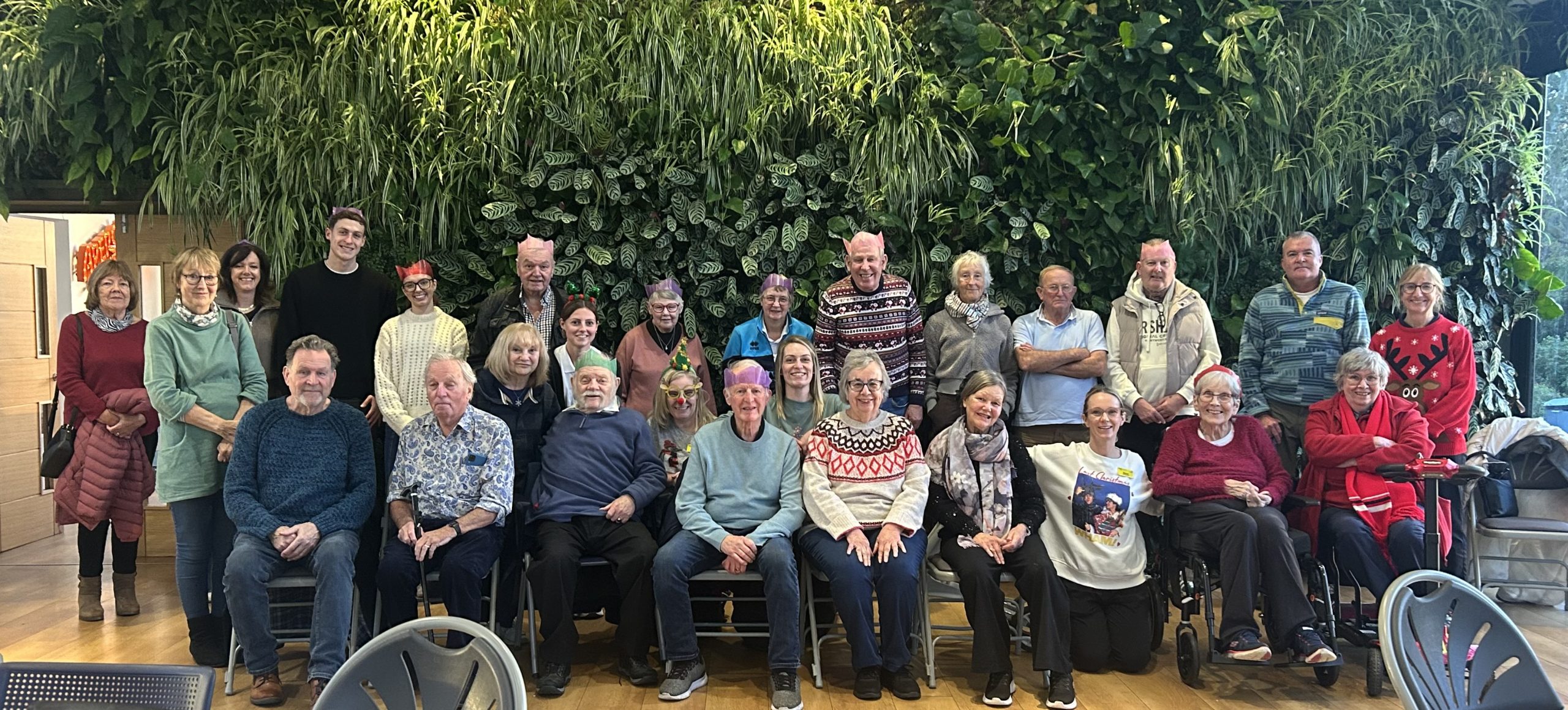
Some people stay in contact after the group sessions finish, and the team hosted a Christmas quiz in December for all of the previous participants so they could meet up again. The event was well attended and enjoyed by all.
Team and Service impact
“Our Bridgey approach, Strides, our virtual exercise group and our fatigue management group, have potentially reduced the number of visits we make to patients. It’s helping with our discharges, and we are promoting self-management.”
As Champions, both Katy and Lara regularly participate in Bridges Sustainability Support, including Monthly Peer Coaching sessions and Termly Champions Events. They say it’s interesting to get perspectives from other Bridges-trained teams and “it encourages us as a team to re-visit the Bridges language, use of phrases, and consideration of the importance of Bridges principles”. Lara and Katy have a slot in their monthly team meeting to discuss things they’ve learned from the events, and they have been invited by their lead to share their Bridges experiences at a ‘self-management event’ for the wider Trust.
“Bridges has enhanced our practice.” They agree that while they were doing a very good job before, Bridges has given them a framework and a structure to work within which has been useful. “In the last two years since we did the Bridges training the demands on the team have continued to grow and grow. Bridges principles have given us the permission to work the way we know we need to work, helping us keep afloat of the pressures.”